Managing your user profile
Your user profile settings control your personal information, security credentials, and interface preferences.
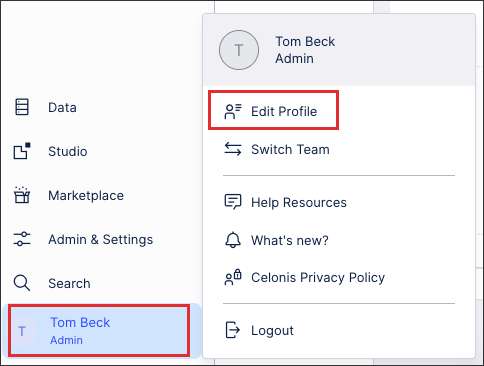
To access these settings, click your profile icon in the navigation bar and select Edit Profile.
Note
If your organization utilizes an external Identity Provider (IDP) like Okta or Azure AD for Single Sign-On (SSO), fields such as email, display name, and password are automatically managed by your corporate IT infrastructure and will appear grayed out.
For more information, see Signing in.
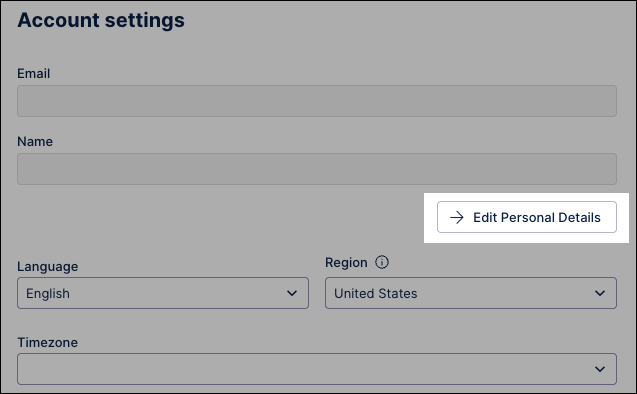
Personal Details: Click Edit personal details to update your profile image, email address, and display name.
Password: Update your account password. If you forgot your password, request a reset link from the sign-in screen.
Time zone and language: Select your preferred time zone and language to ensure process timestamps align with your local operational hours.
On-screen notification duration: Select how long system notifications remain on screen (5 seconds, 50 seconds, or Dismiss manually).
Enable notifications and notification time: Define the exact hours you are available to receive system alerts.
Theme preset: Select the color theme used in your Celonis Platform environment:
System: Uses the browser preferred theme settings.
Light (default): Classic, clean light-themed interface.
Dark: Dark-themed interface optimized for low-light environments.
High Contrast: High-contrast interface designed to maximize readability.
Note
The following features do not support themes: Analysis, Action Flows, Advanced Views, Simulation Asset, Transformation Center, Forms, and Celonis Process Management (CPM).
Visible teams: Hide or show environments in your team selector drop-down menu.
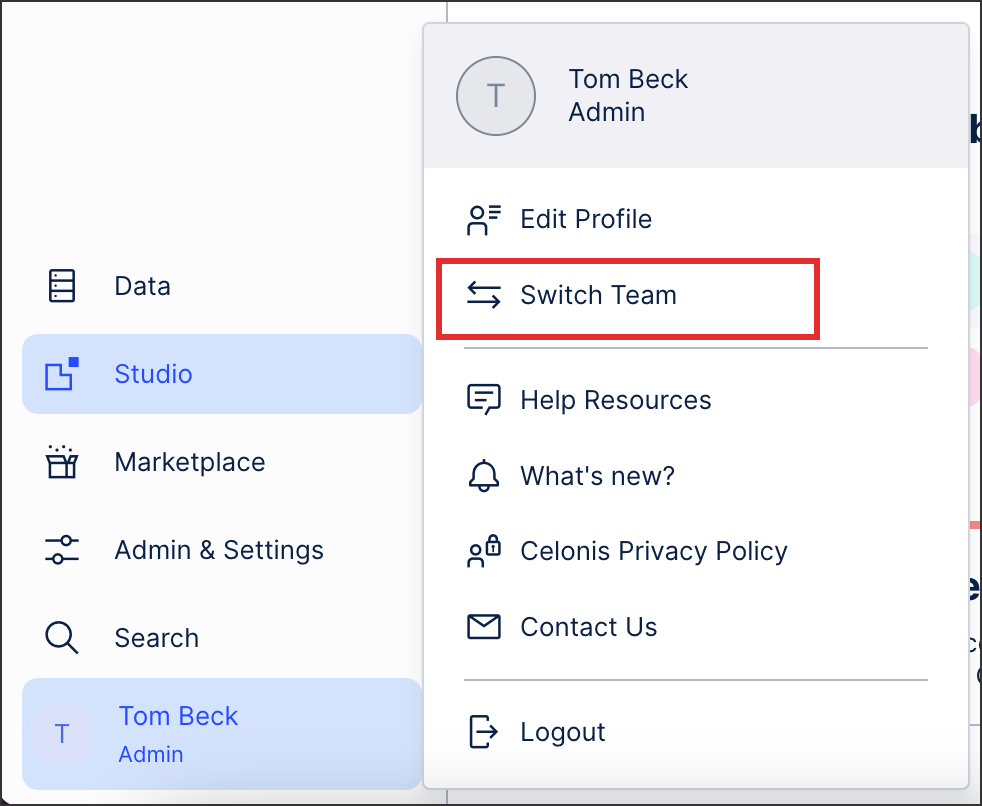
Team membership: Remove your user access from a specific environment.
Warning
This immediately revokes your access to the environment.
To regain access, contact your system administrator.
Account deletion: Permanently erase your user account, including all active team memberships and associated personal data.
API keys allow external automation tools, third-party scripts, or custom extractors to securely communicate with your Celonis instance.
For more information, see: API keys.